Sunday, August 6, 2006

Low-paid laborers and their discontents

Come October, it is quite likely that I will be breaking the law on a daily basis.

No, I don't expect to develop a penchant for hookers, and I'm not nursing a cocaine addiction. Rather, S and I employ a maid who, four days out of seven, brings her grandson Bunty with her to help with the chores.

Bunty is a slight boy, friendly and a rather diligent worker, considering he can't be any older than 12. Mostly he sweeps the floors and perhaps sloshes a bucket of water on the ground, but he has been immeasurably helpful to me numerous times by tracking the errant kittens.

I digress. Yes, the Indian government intends to crack down on child labor; although it is officially illegal now for those under 14 to work in "hazardous industries," this is hardly enforced. Now, they're looking to extend the legislation to prevent children working as domestic servants or at roadside food stands.

In the wake of this news, S and I have been trying to gauge what Bunty's "outside" life is like. He does not go to school, and stopped studying when he reached class five. He says he doesn't want to go back, because he does poorly and doesn't like to study. Of course, this probably means that his grandmother and mother have told him that he can't afford to study; we've offered to pay for his schooling or books, but to no avail. Now we're trying to see if maybe we can help him find an electrician or a mechanic with whom he can apprentice; something, anything that will give him more options.

I am a bit ambivalent about the new law. Although, of course, I think it is abominable to have children working, and I have more than once demanded that Bunty not work in our flat, it's just...a little too bleeding heart liberal to think that a law will stop anything. When it comes down to it, the families of these children have, in all likelihood, forced them into employment because no one else in the family is capable of earning. There are, of course, no plans to help ensure that these families can still do things like eat and have a roof (or tarp, what have you) over their heads. Furthermore, it's not like there is any shame attached to child labor here. Even the poshest families have a "Chotu" or a "Raju" who comes and hoses off their BMW every morning; although there is some public consciousness of this "moral" transgression (the truth or falsity of this statement is something that can be debated in another forum), it's nothing abnormal for a seven-year-old to help put chini (sugar) in your chai, or for a ten-year-old boy to wash your undergarments.

At some point...it just gets so overwhelming. I don't know how to tackle this problem, even at the most micro level. The last thing we want to do is scare Bunty away, make him think that he's not welcome or that we're going to turn him into some higher authority. What can we do? How can we change this situation without forcing him to make a choice to engage in work that is even more harmful?

Imagining the Indian woman

Two pictures, from two different magazines -- one a women's magazine, one a Delhi city magazine. For some reason, these two faces seemed eerily similar to me.

By the way...I could blabber on much more about my motivation and my thoughts while artsy fartsying, but if you care, I suppose you'll ask. Sometimes it seems more important just to present the images and see if they provoke people in the same ways they've provoked me.


Saturday, August 5, 2006

Ads I hate

Apart from the protruding genitalia, which should have been disguised by some sensitive Photoshopping, the tagline is a bit...aggressive. "Prepare to get assaulted"? Umm, no thanks.


Not the other

Excuse the poor execution -- this piece is a bit distorted because I used my point-and-shoot to get it onto the computer, and then I used Paint to clean it up a bit. Still, thought I would put this up, because I've been thinking a lot about how the media portrays Muslims and Islam in the country with the world's second largest population of the religion's adherents (Indonesia, of course, being topping the list).


Second time's the charm

The first time I tried to read 1984, I didn't really absorb it. Let's face it, high schoolers -- for the most part -- just aren't that interested in hearing about the dangers of mind control when they spend six hours a day being lectured to, remonstrated, and molded into the school board's idea of accomplished young adults.

But rereading it was good, particularly in the current sociopolitical context. Yeah, yeah, old saw, but fitting. Rewriting history? Bending words to one's will? Harping on GW Bush's administration and the way in which Rummy et al have trampled on civil liberties is more or less fruitless, but I'm lazy, so I'll do it anyway. Every voting American with two brain cells to rub together should read -- or reread -- this book.

On the importance of history and remembering:
"When there were no external records that you could refer to, even the outline of your own life lost its sharpness. You remembered huge events which had quite probably not happened, you remembered the detail of incidents without being able to recapture their atmosphere, and there were long blank periods to which you could assign nothing." "Everything faded into mist. The past was erased, the erasure was forgotten, the lie became truth."

On literature (and a fairly accurate reflection of my response to books on the Modern Library list):
"It said what he would have said, if it had been possible for him to set his scattered thoughts in order...The best books, he perceived, are those that tell you what you know already."


A la McSweeney's

A short list of Delhi businesses which I have no interest in patronizing:

Sham Enterprises (in Khan Market)
Competent Autos (a chain of secondhand car dealerships, I believe)
Systematic Systems (which makes the lockers for my office gym)
Snipers Salon (in Defence Colony; I assume they meant "snippers")

Ah, the malleability of the English language. Anyone have suggestions to add to the list?

Tuesday, August 1, 2006

Unfortunate headline of the day

From The Hindu, Delhi edition, Tuesday, August 1:

Run against diarrhoea

Perhaps the event's organizers should have hosted, oh, say, a walk? A cricket match against diarrhoea? SOMETHING less laden with double entendre?


Monday, July 31, 2006

Yes, I really needed a day off

And there is no better way to clear your head than to go to the Sarojini Nagar market. Sarojini trades in export seconds, and is probably better known to people outside Delhi as "that place where there was a bombing last year."

But to me, it's just one of those little endearing corners of the city that keep me sane. I find it particularly awesome on Mondays -- the day when traditional stores in the market are closed.

"Bhai saab, Sarojini market," I said to the rickshaw wallah. After asking me to pay double the meter price, I stopped argued for a bit with him in my broken Hindi, and he came down. Then, as we puttered out of Defence Colony, he caught my eye in his mirror.

"Madam? Sarojini Monday bandh."

I wobbled my head, yes yes, fine, I know, crazy white girl. Apparently my friend was unaware that Monday is, in fact, the optimal day to visit Sarojini, because that's the day when the sellers offer the best deals -- men and women spread tarps on the ground and unload masses of garments, each going for no more than Rs 30, most either priced Rs 10 or Rs 20. I suspect that this is because they have perhaps pilfered their goods, but that doesn't matter much to me; someone is getting paid, and I am getting something in return. The world works.

The sun was shining but not blazing, the sky was blue, and I frivolously bought things I fancied, though I likely won't wear most of them. I took myself out for a vegetarian thali and bought some yogurt, stocked up on some fabulous looking mangoes, and treated a little coolie boy to a kulfi. A great day indeed.

(In the picture: a cool circle skirt, a funky blue corduroy pleated skirt, and, the piece de resistance, a summery Kashmiri-embroidered jacket for a fetching Rs 10.)

Sunday, July 30, 2006

The re-emergence of my crappy artistry!

A series: Matrimonials. From left to right, or top to bottom, or however these end up being arrayed, they are 1) Very handsome enterprising, 2) Well-placed match, 3) Wanted, 4) Beautiful intelligent educated, and 5) Proposals invited.


Loopy for Lawrence

It's the path of least resistance: I like D.H. Lawrence. Sure, the writing is a bit ornamental, but for his time, it was risky. It said something. And despite more than eight decades since the book was published, Women in Love is still interesting, provocative, and readable.

I suppose I like this book in particular because the main characters are women, and they're rather well depicted. They're sassy and they're unconvention -- not to mention daring. Here's to books that have female protagonists.

Quotes:

"If one jumps over the edge, one is bound to land somewhere."

"He lay sick and unmoved, in pure opposition to everything. He knew how near to breaking was the vessel that held his life. He knew also how strong and durable it was. And he did not care. Better a thousand times take one's chance with death, than accept a life one did not want. But best of all to persist and persist, and persist for ever, till one were satisfied in life."

"And at last he came to high road. It had distracted him to struggle blindly through the maze of darkness. But now, he must take a direction. And he did not even know where he was. But he must take a direction now. Nothing would be resolved by merely walking, walking away. He had to take a direction."

"'...I think that a new world is a development from this world, and that to isolate oneself with one other person isn't to find a new world at all, but only to secure oneself in one's illusions.'
Ursula looked out of the window. In her soul she began to wrestle, and she was frightened. She was alsway frightened of words, because she knew that mere word-force could always make her believe what she did not believe."

"He turned away. Either the heart would break or cease to care. Best cease to care. Whatever the mystery which has brought forth man and the universe, it is a non-human mystery, it has its own great ends, man is not the criterion. Best leave it all to the vast, creative, non-human mystery. Best strive with oneself only, not with the universe."

Saturday, July 29, 2006

Just say no!

Seen in the parking lot of Khan Market, an upscale locale in south/central Delhi popular among the expatriate crowd:

"Say No To Crackers"

I sincerely hope they mean fireworks, and not my fine firang friends.

You down with OTC? (Yeah, you know me)

Chalk another one up for the harried urban Indian -- according to today's Times of India, cough syrups and other over-the-counter medicines may soon be sold at grocery stores. Which means that those crusty old men nursing treacly bottles of grape Benadryl can rejoice, as they'll save an extra trip in their daily routine (but seriously, who do these guys think they're fooling? Isn't it more efficient just to buy a sipper of whisky and be done with it? You can't have had the sniffles or a cough for ten months!).


I, for one, am excited. As an American, I first thought it was such a novelty to go to a fruit stand, then to a local grocery for staples, and make an occasional run to the chemist; but when you're working 10 hours a day, it doesn't leave much time for myriad menial tasks. Hoo ha!


Tags: , , , , ,


Powered by Qumana


Our global world

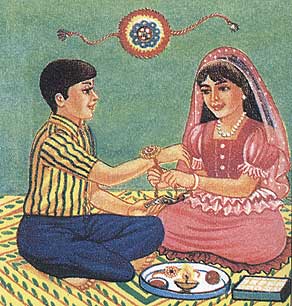
DHL has launched a new service targeting Indian consumers -- the Rakhi Express. Raksha Bandhan (which this year is on August 9, I believe) is a holiday where sisters give little gifts, such as sweets, to their brothers, and wrap the rakhi (something akin to a string bracelet, though that doesn't really capture the meaning of the object) ceremonially around his wrist.


I'm always interested to see the ways global companies attempt to cater to "unfamiliar" markets. DHL seems to have learned from McDonald's, which has excelled by tailoring their menu to Indian tastes -- no beef, but innovations such as the "McAloo Patty" and the "Shahi Chicken McCurry Pan."


This is the second interesting service that I've seen from DHL -- earlier, I posted on a offer for corporate clients to send Alphonso mangoes abroad.


Tags: , , , , , ,


Powered by Qumana


Friday, July 28, 2006

About to throw my computer out the window

Because today is one of those days when expaticon is painful. It's tax filing time here in India, and despite my appeals for eight months for, you know, a little guidance on what I need to do, I am being given the run around.


See, it wouldn't be so bad if this didn't happen any time I try and accomplish any task that must be routed through the office bureaucracy. The manager here wants to impress the people in New York, so when they make noise he becomes solicitous and assures me that he'll do anything to make my time here easier, but as soon as their protests fade, it's e-mails being ignored, calls not being picked up, questions delegated to a lesser power who doesn't understand my case, thus causing endless iterations of beggery until I, ripping my hair out, call New York on the verge of tears and ask them to stop the insanity.


Tags: , , , ,


Powered by Qumana


Thursday, July 27, 2006

New and interesting

Just downloaded Qumana, as suggested by Lifehacker, and of course, it's made my computer have a rather massive conniption. Poor ole girl; I bought her for $200 about a year and a half ago and have since trucked her around the world with me. She's tired, her memory is fading, but mommy just can't put her out to pasture.


Aaaaanyway, Qumana: free downloadable software that allows you to post to Blogspot from your desktop. Can also embed Technorati tags, etc. This is a test post; the jury's still out on whether this is a) awesome or b) gnarly.


Tags: , , , , ,


Powered by Qumana


Wednesday, July 26, 2006

Not the week to read this book

So, the unfortunate combination of death and Norman Mailer has made me quite depressed, but alack, I must review the latest Modern Library book I read.

Or, because I am numb, I must cut the crap and telegraph a few select quotations. It took a while to get into the writing, but I don't think I'll soon forget the tension and despair in Mailer's narration.

Political application to the Iraq war?
Fondness for a country is all very lovely, it even is a morale factor at the beginning of a war. But fighting emotions are very undependable, and the longer a war lasts the less value they have. After a couple of years of war, there are only two considerations that make a good army: a superior material force and a poor standard of living.

Impermanence:
All the frenetic schemings, the cigar smoke, the coke smoke, the carbolic and retch of the el, the frightened passion for movement of ant nest suddenly jarred, the hurried grabbing plans of thousands of men whose importance is confined to a street, a cafe, and there is no other sense than one of the present. History is remembered with a shrug; its superlatives do not match ours.

Frustration:
...every time I start an affair, I know how it's going to end. The end of everything is in the beginnings for me. It's going through the motions.

An aside: Did this inspire Go Fug Yourself, or is the recent pop culture adoption of Mailer's WWII argot mere coincidence?

Tuesday, July 25, 2006

Shock and awe


A new collage; an advertisement for Kerala, a consumer goods advertisement, and an editorial shot. Guess which element is which?

Forget not that I ALSO majored in gender studies

Surfing around, and found a great site/blog/historical compendium about India. It's just an honest, lovely little site that represents more than 100 years of work, culled by (presumably) the latest generation of a middle-class Indian family.

My favorite part is the portraits; one section offers glimpses of women from different parts of the country, different socioeconomic backgrounds, and so forth. Another features pictures of people who have never before been captured on film. It isn't glitzy, it isn't high tech, the portraits don't highlight tremendous technical skill. But they are genuine, and they show an India that is unknown by people who haven't lived in the country. And, lest I get all teary eyed liberal on you, they even have a rocking section on unusual vegetables!

Interesting, too, is the way in which the site is produced. According to the FAQ, "Krishna and Jyotsna do not have a computer and instead prepare the contents manually in a extremely laborious method and mail it to Vikas by postal mail. The pictures are then scanned, articles retyped, and uploaded to the website. "

(Photo courtesy www.kamat.com)

Sunday, July 23, 2006

Potty humor

If I don't visit this museum soon, I think I will die.

I heard about the Sulabh Toilet Museum a few years back, but every time I've ever mentioned it to a Delhiite, they've looked at me like I had three or four heads. I know, it sounds crazy -- even the NGO that runs it admits it! (e.g., "Ever wondered what a museum dedicated entirely to the history of toilets would be like? If that peculiar question ever crossed your mind -- seek professional help! But if you really want to know, you can visit Sulabh in New Delhi, India") -- but then again, this is India. Chalte hai.

If you're not near the subconty, the Web site itself is pretty good. Don't miss the section on Aryan codes for using the loo, including these edicts from the Manusmriti:

  • Before going to the toilet the scripture prescribes elaborate drill
  • Before going for defecation one was to chant the following mantra from Narad Puran: Gachhantu Rishio Deva/Pishacha ye cha grihya ka/Pitrbhutagana survey/Karishye Malamochanam
  • Before going for defecation it was prescribed that the sacred thread should be rolled to a smaller size and be put on the right ear
  • The head was to be covered with a cloth. In the absence of cloth, the sacred thread was to be brought over the head and was to be hung on the left ear
  • Then while observing silence and facing north in the day and south in the night one could defecate
  • While defecating one was not to touch water
  • After defecation the water pot was to be held in the right hand, left hand was to be used for cleaning
Thank you, Dr. Bindeswar Pathak, for all your work related to my most puerile interests!

Feeling fartsy!

O.K., so this was my Sunday morning attempt at visual splendor. Sorry for the poor reproduction -- my digi cam can only do so much -- and my poor pasting skills. Made from magazine clippings and my own creative faculties!